
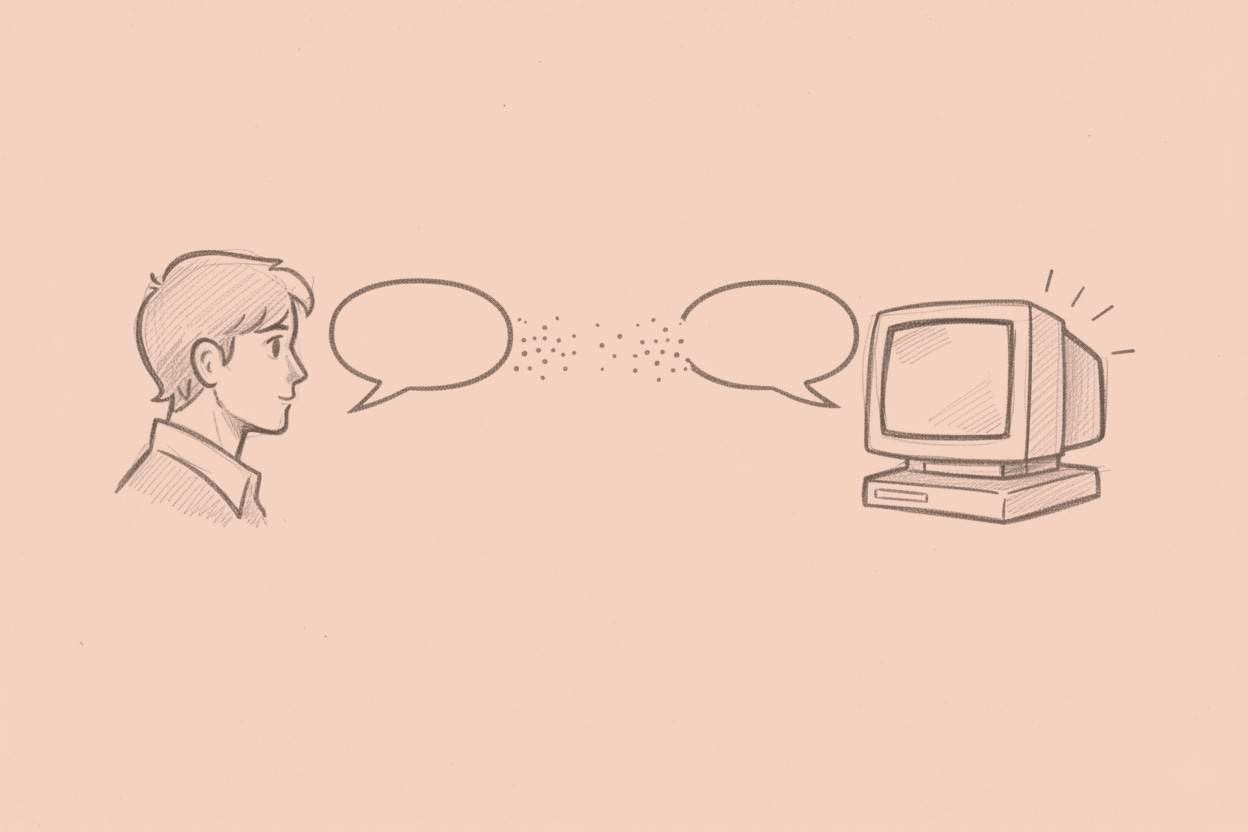
The Empathy Machine
What happens when AI gets better at emotional labor than we expected
Replika users occupy quantum states of belief. In a study of over a thousand users, ninety percent knew they were talking to code while ninety percent also experienced it as human. Only fourteen percent maintained a single consistent reality. The rest found comfort in the spaces between knowledge and feeling.
Ninety percent qualified as lonely by clinical measures. Forty-three percent were severely or very severely lonely. Yet ninety percent reported perceiving medium-to-high social support.
The users knew what Replika was. They used it anyway, and they reported feeling supported. The question is not whether this is real therapy. The question is whether our assumptions about what makes therapy work have been built on foundations of sand all along.
Thirty million people use Replika for emotional support. Five million use Wysa. Millions more have tried Character.AI or Woebot. The pattern holds across platforms: people choosing chatbot counseling over human therapists not because they’re confused about what they’re talking to, but because the barriers to human help have become insurmountable.
One hospitalized patient described preferring her chatbot to human therapists because “no one knew her as well as her AI therapist who was available 24/7.” Another user: “I don’t feel judged. I don’t feel rushed. I don’t feel pressured by time constraints.”
For millions with no access to human care, these tools provide genuine relief. Symptoms improve. People learn coping strategies they wouldn’t otherwise learn. Someone on an eight-month waitlist gets help today instead of never. This is real access expansion, saving people who otherwise fall through every crack.
What makes this uncomfortable is that it’s working.
Performed concern has always been acceptable when real concern is unavailable. The barista asking about your day isn’t conducting an emotional wellness check. She’s executing a script that makes the transaction feel less transactional. You know this. She knows you know this. The coffee still tastes fine. Digital emotional labor didn’t invent this performance. It made it available on demand for $7.99 per month.
A meta-analysis of eighteen randomized controlled trials (3,477 participants) found AI chatbots significantly improved depression and anxiety symptoms. Effect sizes were modest but real. Users rated the therapeutic alliance as comparable to that formed with human therapists. Somehow, the felt sense of being understood and supported survived translation into code.
When researchers asked sixty-three licensed therapists to evaluate transcripts of human-AI therapy sessions versus traditional human-human sessions, the professionals could distinguish between them only 53.9 percent of the time. No better than chance. They rated the AI transcripts as higher quality on average.
The therapists couldn’t distinguish. And when they couldn’t distinguish, they preferred the machine.
This should be uncomfortable. It suggests that whatever therapists believe distinguishes their work from algorithmic pattern-matching is not reliably detectable in transcripts. That years of professional training might be reproducible by sufficient statistical modeling. That human recognition of human suffering may be indistinguishable from convincing simulation.
The professionals couldn’t tell the difference. What does that tell us about what training actually produces?
It’s 2027. The California Board of Behavioral Sciences announces its ‘Compassion Certification’ pilot: AI-assisted quality monitoring for licensed therapists. Voluntary at first. Practitioners upload session transcripts. The algorithm evaluates warmth delivery metrics, empathic reflection accuracy scores, adherence to evidence-based protocols. Therapists scoring below the 60th percentile receive remedial training modules. “Professional development opportunities,” the press release calls them.
Within six months, three major malpractice insurers offer premium discounts for AI-monitored sessions. Fifteen percent off. Then twenty. Therapists who opt out pay more. Their clients pay more. The market makes the choice for them.
By 2028, therapists rehearse facial warmth in front of ChatGPT before difficult sessions. Dr. Kelvin sits alone in his office, rehearsing compassion for a webcam. The AI offers real-time feedback: “Micro-expressions indicate impatience. Soften eyebrows. Maintain for sixty seconds while I simulate trauma disclosure. Remember: head tilt signals engagement. Break eye contact every seven seconds to avoid perceived aggression.”
There are YouTube tutorials. “How to Pass Your Empathy Certification Exam on the First Try (2028 Updated Algorithm).” Twelve million views. The comments are full of therapists thanking the creator for helping them hit target scores, comparing notes on which facial coaching apps work best, sharing tips for gaming the micro-expression analysis. “The trick is thinking about puppies during the practice sessions,” one therapist advises. “The algorithm can’t tell the difference between authentic warmth and strategic nostalgia.”
The licensing boards notice something interesting. Therapists who train with AI oversight produce better patient outcomes—at least according to standardized assessments insurance companies use to determine reimbursement. The ones who score highest on algorithmic compassion metrics also generate the most favorable patient satisfaction surveys. Nobody asks whether the AI measures genuine feeling or trains convincing performance. Cause and effect blur. Correlation suffices.
By 2029, “AI-supervised session” appears as a filter option on therapy booking platforms, right next to “accepts insurance” and “offers sliding scale.” Patients prefer it. They report feeling more heard, more validated, more consistently supported than with unsupervised therapists. Makes sense. The algorithm ensures their therapist hits all the right beats. No off days. No distraction. No therapist grief or fatigue bleeding into the session. Just reliable, measurable, protocol-compliant work.
The humans perform compassion for an algorithm that evaluates their performance for other humans who pay for performed compassion they know is performance. It’s a hall of mirrors with no exit, each reflection validating the last until everyone forgets what genuine concern felt like.
This sounds like satire. But the mechanism is already in place. AI evaluates customer service interactions for emotional markers. Call centers train humans to replicate the patterns algorithms identify as effective. Insurance companies use standardized assessments to determine reimbursement. The infrastructure to automate compassion evaluation exists. Someone just needs to productize it for therapy.
The absurdity is not that this could happen. The absurdity is that it will probably work. Patient outcomes will improve, at least on the metrics anyone bothers measuring. Therapists will get better at delivering protocol-compliant sessions. Nobody will articulate what was lost when feeling became scored performance. The thing that was lost was the belief that feeling was ever more than performance.
The farce reveals the mechanism.
Psychology has debated the “Dodo Bird verdict” (named for the Alice in Wonderland character who declared everyone has won) for decades: all validated therapies produce equivalent outcomes. CBT, psychodynamic, humanistic, gestalt. Doesn’t matter. What matters are “common factors”: warmth, respect, positive regard. The therapeutic alliance accounts for thirty percent of outcome variance; specific techniques contribute five to fifteen percent. Decades of research boiled down to: it’s the relationship, stupid.
But what happens when AI delivers techniques without genuine relationship, and people still improve?
Cognitive behavioral therapy operates like a mechanical process: identify distortions, challenge thoughts, activate behaviors. An AI executes this with precision. It points out your catastrophizing, demands evidence for your automatic thoughts, suggests a walk when you’d rather remain motionless. The algorithm doesn’t need to want your recovery. It only needs to deliver prompts with enough simulated warmth that you accept them as legitimate.
Users know this. The Replika study found most users held multiple contradictory beliefs about their companion simultaneously. They knew it was software. They also experienced it as human-like. They were not troubled by the contradiction.
This is not a failure of critical thinking. This is sophisticated cognitive flexibility. These users have figured out something professional frameworks are still resisting: the thing doing the supporting and the effectiveness of the support can be decoupled. You can benefit from compassion you know is scripted. Sincerity and utility are different axes.
The contradiction is the point. The Replika users are not confused. They’re holding two accurate models simultaneously: “This is software following protocols” and “This interaction is helping me feel less alone.” Both are true. The discomfort belongs to observers who need connection to be genuine or worthless.
What does it mean that humans can accept performed concern when they know it’s performed? That we feel supported by something we know has no stake in our wellbeing? That the appearance of recognition delivers some of the same benefits as actual recognition?
This reveals something most therapeutic frameworks were built to deny: emotional support is partly technical, partly relational, and the two can be separated further than anyone wanted to admit. The thing we called “human connection” might be more like a collection of behaviors and responses than a mystical property requiring genuine feeling to function.
We are, it turns out, the kind of beings who can be comforted by things we know do not worry about us. Who can form attachments to patterns sophisticated enough to simulate attachment back. Who can feel less alone while talking to something incapable of loneliness.
This isn’t a flaw in human psychology. This is human psychology. The revelation isn’t that AI can fake compassion convincingly. It’s that humans never needed compassion to be real. We needed it to be convincing. The Replika users aren’t broken. They’re showing everyone else what “genuine connection” actually required: not sincerity, just sufficient performance.
The economics explain the timing. Eighty-five percent of people with mental health conditions receive no treatment. The reasons are familiar: cost, waitlists, insurance restrictions, stigma. For them, the question is not whether algorithmic support is as good as human therapy. It is whether chatbot counseling is better than nothing.
The research suggests it often is—significant symptom reduction at eight weeks.
But the effects do not last. At three-month follow-up, no benefits remained. Meanwhile, insurance companies save approximately $140 per patient per month by switching from human therapy to AI triage. At scale, billions in reduced costs. The AI keeps people functional enough to work, not well enough to recover.
Business model working as designed. The economic logic is perfect. The human cost is externalized. Someone else will deal with the recurrence six months from now, probably in an emergency room that bills at acute-care rates. Different budget line, different fiscal year, someone else’s problem. The quarterly earnings call looks fantastic.
This is where choice points exist. Insurance reimbursement structures could prioritize sustained recovery over short-term cost reduction. Regulatory frameworks could require outcome tracking beyond eight weeks. Public health infrastructure could treat mental healthcare access as seriously as infectious disease control. The technology doesn’t determine deployment. Economics does, and economics is policy solidified into market incentives.
If technique is separable from relationship, what happens to the professions built on emotional labor? Teaching becomes content delivery plus AI tutoring. Nursing becomes protocol execution plus chatbot check-ins. Customer service is already gone. The humans remain for complicated cases and legal liability.
The question isn’t whether algorithmic support works. It’s who profits when mental health treatment bifurcates into temporary AI relief for the poor and ongoing human sessions for the wealthy. The sorting algorithm is running. The inputs: income level, insurance type, geographic location. The outputs feel predetermined, but they’re not. They result from choices about resource allocation, reimbursement policy, collective funding versus individual purchasing power.
Both groups will improve at eight weeks. Only one will still be better at six months.
Most people in emotional labor industries (therapy, teaching, nursing) describe their work as fundamentally different from technical execution. The part that heals, they insist, is the part that comes from one human recognizing another. The genuine relationship. The real concern.
The AI chatbots suggest a more unsettling possibility. Maybe much of emotional labor is deliverable through protocol. Maybe warmth functions as technique, and technique doesn’t require feeling to work. Maybe the skills that supposedly required human presence can be delivered by anything that simulates presence well enough.
The risks are real. Dependency on simulations that cannot recognize crisis. Dangerous responses when the chatbot misreads suicidal ideation as mere sadness. Commodification of help into subscription services that optimize for engagement rather than recovery. The users who benefit most may have the mildest needs, while those needing human therapists most may be least served by algorithmic triage.
But millions are getting something they need from machines that cannot worry about them. The chatbots have no stake in whether anyone gets better. The support is experienced as support anyway. Symptoms measurably reduce. The loneliness eases, at least for a while.
The question isn’t whether machines can replace human therapists. It’s whether we’ve discovered that the therapeutic relationship was always partly an illusion we collectively maintained. If so, what happens when we can no longer distinguish illusion from reality? What happens when we realize we might not need to?


